
A Tale of Honor, Courage & Resilience!
A journey through time and heritage when we delve into the illustrious legacy of the Wallace family’s history, an esteemed clan originating from the captivating Scottish landscapes. Clan Wallace has graced the annals of time for generations. Renowned for embodying virtues of honor, bravery, and unwavering fortitude. the Wallace name resonates as a testament to these timeless qualities. its exceptional lineage evokes a sense of wonder and respect, beckoning us to explore the intricacies that have woven their way into the history’s fabric.
From its origins in Scotland’s bygone eras to the enduring impact it has left on the global stage, the saga of the William Wallace family history remains an indelible imprint on the world’s collective consciousness. Through this exploration, we shall unearth the heritage that defines the Wallace clan and trace the steps of its legendary figureheads, including the illustrious William Wallace himself.
Clan Wallace History:
Wallace Clan Crest: Issuant from a crest coronet, a dexter arm vambraced, the hand brandishing a sword. In plain language, an armoured right arm holding a sword, rising from a coronet.
Motto: “Pro libertate” (For Liberty).
Chief: Andrew Robert Wallace of that Ilk, 36th Chief of the Name and Arms of Wallace.
Originating as Strathclyde Britons in the ancient Kingdom of Strathclyde, they may have also been connected to the Stewarts in Scotland. First recorded as Richard Walensis around 1165, they aligned with the High Stewards and held lands near Kilmarnock, later acquiring Elderslie and Auchinbothie. Contrary to prior belief, William Wallace, the renowned Scottish freedom fighter, was actually the son of Alan. The Wallaces of Craigie, linked to Sir William Wallace of Scotland,
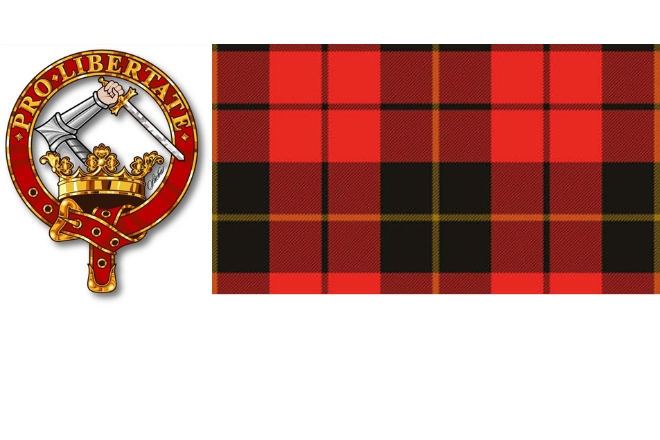
who gained lands through marriage and achieved recognition, with Captain Henry Wallace being acknowledged as Chief in 1888. Ian Francis Wallace of that Ilk, the 35th chief, died in 2016 and was succeeded by his son, Andrew Robert Wallace, the 36th Chief of the Name and Arms of Wallace. Notable figures include Robert Wallace, a key figure in the Scottish Enlightenment, Sir Donald Mackenzie Wallace, a foreign correspondent, the composer William Wallace, and Henry Agard Wallace, Vice President of the United States from 1941 to 1945.
Sources: the Clan Wallace Society (clanwallace.org) and the Clan Wallace entry on Wikipedia.
The Name Wallace: Meaning and Origin!
The Clan’s legacy weaves Welsh and Scottish origins into an intricate tapestry. Rooted in the 12th century, the name “Wallace” stems from “Walensis,” reflecting cultural ties to Wales and Strathclyde. Sir William Wallace’s heroic stand against English rule, epitomised by the Battle of Stirling Bridge, kindled Scottish rebellion. Amid challenges, Wallace’s legacy persevered, shaping Scotland’s culture and politics. it’s impact has extended through alliances and achievements, with John Wallace’s triumphs in the 15th-century Battle of Sark and strategic marriages.
The 17th-century roles and 19th-century chieftainship further molded Scotland’s trajectory. Name “Wallace” rooted in Old French, gained significance through Sir William Wallace’s valor in the Wars of Scottish Independence. It symbolizes lineage, collective identity, and historical movements. In total, the name resonates with history, cultural value and unity, epitomizing Scotland’s spirit. The Wallace Clan’s narrative, resonating through generations, stands as a testament to bravery and enduring influence.
Wallace Family Tree: Notable Wallaces and Places Linked to the Name
Numerous other individuals bearing the surname Wallace have left a lasting impact on the global stage. Alfred Russel Wallace, for instance, formulated his own evolutionary theories independently of Charles Darwin. His groundbreaking insights were derived from extensive examinations of flora and fauna in regions such as South America and the East Indies. These distinct theories were concurrently published in 1858.
Prominent Locations Linked to Wallace Legacy
Stirling:
This city stands as an essential destination for any member of the Wallace lineage. It has been the backdrop for pivotal events in Scotland’s history and is forever intertwined with the legacy of Wallace. The Battle of Stirling Bridge in 1297, immortalised in Scottish lore, owes its distinction to Wallace’s strategic acumen and unwavering determination, which led to the defeat of the English forces arrayed against him. Visitors have the opportunity to explore the battlefield, where the imposing National Wallace Monument affords panoramic views of the surrounding landscape.
For the full story of the man himself, read our biography of William Wallace.
Dryburgh:
This serene locale is renowned for the picturesque remnants of its abbey. Notably, Dryburgh was the first community to erect a memorial honouring Wallace in 1814. Adjacent to Bemersyde House, a historical seat of Clan Haig, stands a statue commemorating Scotland’s national hero.
Ascending to Scott’s View is highly recommended, offering breathtaking vistas over the Eildon Hills and the Tweed Valley—a vantage favoured by Sir Walter Scott. The town’s captivating and evocative ruined abbey should not be overlooked.
Roslin Glen Country Park:
This glen is associated with the Battle of Roslin in February 1303, a Scottish victory over a larger English force led by John Comyn and Sir Simon Fraser. Wallace’s presence at the battle is tradition rather than record, but Wallace’s Cave, a landmark within the park, keeps his name firmly attached to the area.
Lanark Museum:
A visit to this museum yields insights into the ties between the town and Wallace. According to legend, Wallace wed his spouse Marion Braidfute in the confines of St Kentigern’s Church.
Riccarton, Ayrshire
A leisurely stroll through this rural Ayrshire town carries one through the ancestral abode of the clan, dating back to approximately 1160.
The Legacy of the Wallace Clan Tartans!
Wallace Tartan legacy embodies Scottish history, honouring Sir William Wallace’s spirit and the nation’s resilience. With its distinctive stripes, it symbolises Scotland’s landscape and pays homage to Wallace’s role in the Wars of Scottish Independence. Beyond lineage, it represents national pride, uniting past and present while embodying core Scottish values.
Setting aside this consideration, it is noteworthy that multiple tartans are affiliated with a singular clan, a circumstance that occasionally engenders complexity for individuals in the process of selecting their respective clan tartan. To address this matter, we have meticulously crafted a comprehensive blog post elucidating the nuances distinguishing these Tartan Pattern and styles.
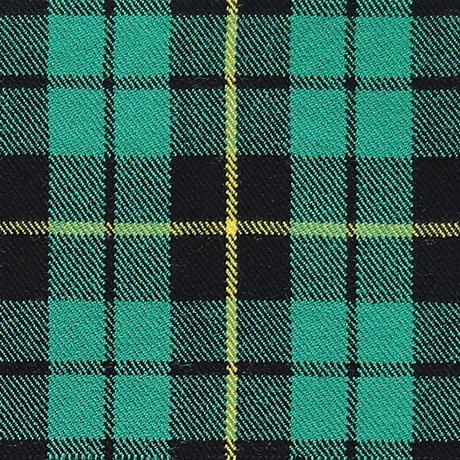
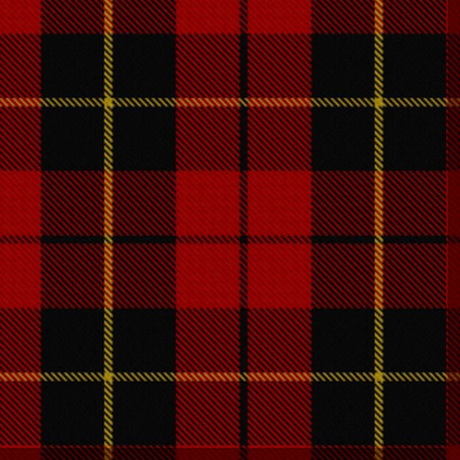
Red Wallace, Green (Hunting) Wallace and Blue Wallace, each woven in modern, ancient and weathered shades, are all comparatively modern designs rather than medieval ones. You can see every colourway, made to order as kilts, skirts, scarves, ties and fabric by the yard, in our Wallace tartan collection, and read about the pattern itself in our Wallace tartan guide.
Wallace Ancient:
The late Wallace Clan Chief, Ian Francis Wallace, favoured the green variation known as the Wallace Hunting or Green tartan. This version incorporates muted colours for hunting camouflage. Options encompasses Wallace Hunting Modern, featuring navy blue, bottle green, and a yellow stripe, or the softer, mossy green of the Wallace Ancient Tartan. To explore the concept of ancient and modern tartan versions further, we’ve dedicated a separate blog post to this topic.
Clan Wallace Coat of Arms:
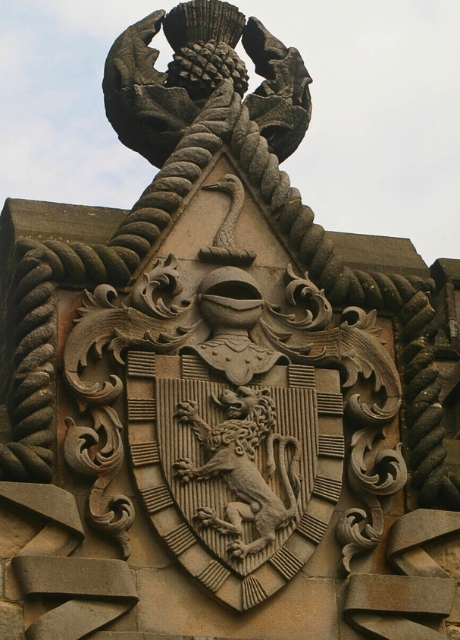
The arms of the chief of Clan Wallace are Gules, a lion rampant Argent, a white lion on a red shield, which is why the lion appears on so much Wallace heraldry. The crest above the helmet is an armoured arm brandishing a sword, rising from a crest coronet, with the motto Pro libertate. Clan members do not wear the chief’s full coat of arms. They wear the crest badge, the arm and sword shown inside a strap and buckle carrying the motto, on a cap or a plaid brooch.
Frequently Asked Questions
Where did the last name Wallace come from?
The last name Wallace originates from Scotland, and it is an Anglo-Scottish surname derived from the Old French word “waleis,” meaning “foreigner” or “Welshman.”
Did William Wallace wear a kilt?
The historical accuracy of whether William Wallace wore a kilt is debated. The kilt as we know it developed after his time, so it’s unlikely he wore one. The idea of him having a tartan with his name is a modern invention as tartans associated with clans and individuals emerged centuries after his life. The depiction of Wallace in a kilt with a specific tartan is more a modern interpretation than historical fact.
Who betrayed William Wallace?
Sir John de Menteith is often considered to have betrayed William Wallace by capturing him and handing him over to English authorities in 1305.
Did William Wallace have children?
There are no records or reliable historical sources that confirm whether William Wallace had any children or descendants.
Are all Wallaces related to William Wallace?
No, not all individuals with the last name Wallace are directly related to William Wallace. The name has been adopted by various individuals and families over the centuries for different reasons.
What part of Scotland is the clan from?
The Wallace clan is believed to have originated in the region of Ayrshire in southwest Scotland, with some historical connections to areas around Lanarkshire as well.
Which tartan should a Wallace wear?
Any of the Wallace tartans. Red Wallace is the best known and the one most people choose for a kilt. Green Wallace, also called Wallace Hunting, was favoured by the late chief and suits everyday wear. Blue Wallace is a quieter option. All three come in modern, ancient and weathered shades and are woven to order in our Wallace tartan range.


