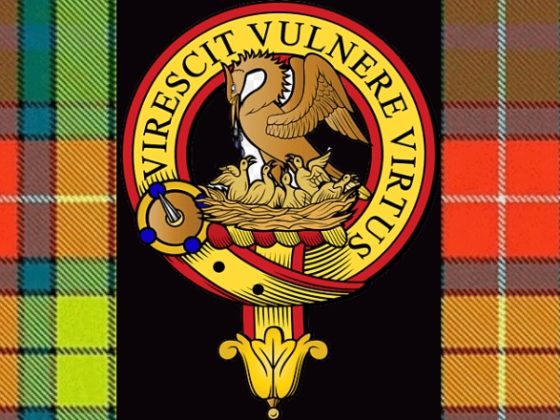
Uniting Heritage, Honor, and Legacy in a Dynamic Tapestry
Crawford Motto: Tutum te robore reddam (“I will give you safety by strength.”)
Crawford Crest: A stag’s head erased Gules, between the attires a cross crosslet fitchée Sable
Welcome to our comprehensive guide on the illustrious Crawford Clan, a noble Scottish family with a rich history rooted in valour, chivalry, and their enduring commitment to Scottish heritage. In this article, we delve deep into the origins of the Crawford’s history tracing their Norman lineage and exploring the significant contributions they made to Scottish history. Join us as we uncover the remarkable tales of bravery, loyalty, and the enduring spirit that defines the Crawford Clan.
Crawford Clan History
The crawford’s origin:
The surname is a place name. It comes from the barony of Crawford in Lanarkshire, in the Scottish Lowlands, and the family was using it by about 1160. The place name is usually explained as Old English crawe, meaning crow, and ford, a river crossing, so a Crawford is literally someone from the crow’s ford. Spellings such as Craufurd and Crawfurd belong to the same family. From Lanarkshire the name spread into Ayrshire and Renfrewshire, and today people with the Crawford surname can be found across the world, many of them of Scottish or Ulster Scots descent.
Norman knights in Scotland & Connection with Barony of Crawford
The Crawford family’s roots can be traced back to Norman origins, with their name deriving from the barony of Crawford in Lanarkshire (one of the clans in Scotland). Legend holds that Reginald, son of the mighty Earl of Richmond, was among the Norman knights dispatched by David I. A defining moment in the family’s history was the legendary incident involving Sir Gregan Crawford, who valiantly saved the life of King David I during a stag attack in 1127. This heroic act played a pivotal role in the establishment of Holyrood Abbey, forever cementing the Crawford family’s place in Scottish lore.
Sir Gregan Crawford and the legendary stag incident
The stag incident is the founding legend of the family. In 1127, according to tradition, King David I was hunting near Edinburgh when a stag charged him, and Sir Gregan Crawford is said to have come to the king’s aid. The king later founded Holyrood Abbey in thanks for his deliverance. Like most foundation legends it cannot be proved from contemporary records, but it explains why a stag’s head appears in the Crawford crest and why the family is so closely tied to the early Scottish court. The legend is summarised in the Clan Crawford entry on Wikipedia.
Descendants and notable members of the Crawford Clan
The Crawford Clan has a rich and storied history, boasting several notable members who have left their mark on various fields and historical events. From influential figures to significant contributions, the Crawford Clan’s legacy spans generations. Here are some key highlights:
Sir John Crawford's Daughters' Marriages
Sir John Crawford, a prominent member of the Crawford Clan, saw his daughters enter into influential marriages, further cementing the family’s connections and influence in their time. The marriages played a significant role in expanding the Crawford Clan’s network and strengthening their position within the aristocracy.
Sir Reginald Crawford: Sheriff of Ayr
Sir Reginald Crawford held the esteemed position of Sheriff of Ayr, where he played a vital role in maintaining law and order in the region. Known for his fairness and commitment to justice, his contributions to the legal system were highly regarded and helped establish the Crawford Clan’s reputation for upholding law and order.
Connection With William Wallace
The Crawfords have a direct family link to Scotland’s most famous patriot. Sir Reginald Crawford, appointed Sheriff of Ayr in 1296, had a sister who married Wallace of Elderslie, and she is recorded as the mother of William Wallace. That makes the Crawfords Wallace’s maternal kin, and it is one reason the family features so often in accounts of the Wars of Independence. You can read more about the Wallace side of the story in our guide to Clan Wallace.
Grant from Robert the Bruce
The Crawfords of Auchinames were granted lands by Robert the Bruce, the legendary Scottish king. This recognition highlights the clan’s significance during that era and their ties to Scottish royalty. The grant solidified their status as influential landowners and showcased their loyalty to the monarchy.
Sir Thomas Crawfurd of Jordanhill:
Sir Thomas Crawford of Jordanhill is remembered for one of the boldest actions of the civil war that followed the deposition of Mary, Queen of Scots. Around 1570 to 1571 he led a night assault up the rock of Dumbarton Castle, then held for the queen, and took it with a force of about one hundred and fifty men. The feat is described in the section on the castle below.
John Craufurd, Hereditary Falconer to the King
John Craufurd held the esteemed title of Hereditary Falconer to the King, emphasising the clan’s close relationship with the monarchy and their involvement in royal pursuits. This position showcased the Crawford Clan’s unique role in the royal court and their responsibilities in matters of falconry and hunting.
Sir Alexander Craufurd and Robert Craufurd's contributions
Sir Alexander Craufurd and Robert Craufurd, both distinguished members of the Crawford Clan, made significant contributions in their respective fields, leaving a lasting impact on their communities and beyond. Whether in politics, academia, the arts, or other domains, their achievements brought honour to the Crawford name and enhanced the clan’s reputation.
Emigration of the 23rd Laird of Auchinames to Canada
The 23rd Laird of Auchinames decided to seek new opportunities in Canada, resulting in the Crawford Clan’s presence extending beyond Scotland. Their emigration marked an important chapter in the clan’s history, reflecting the spirit of adventure and resilience in the face of changing circumstances.
George Crawford & John Crawford Contributions:
George Crawford and John Crawford, notable members of the clan, made noteworthy contributions in their respective fields. Whether in science, literature, business, or any other area of expertise, their achievements brought distinction to the Crawford Clan and contributed to the advancement of knowledge and society.
Thomas Crawford's Victory at Dumbarton Castle
Thomas Crawford’s remarkable victory over Mary Queen of Scots’ forces at Dumbarton Castle showcased the military prowess and strategic capabilities of the Crawford Clan. This triumph in a significant historical conflict solidified their reputation as skilled warriors and defenders of their lands.
Friendship Between John Walkinshaw Craufurd and the Jacobite Earl of Kilmarnock
John Walkinshaw Craufurd formed a lasting friendship with the Jacobite Earl of Kilmarnock, highlighting the clan’s connections and alliances during significant historical events. The friendship between John Walkinshaw Craufurd and the Jacobite Earl of Kilmarnock demonstrated the Crawford Clan’s involvement in the Jacobite cause, a movement seeking to restore the Stuart monarchy in the 18th century. This association showcased the clan’s support for the Jacobite rebellion and their dedication to the political ideals they held dear.
The Crawford Clan’s descendants and notable members have played pivotal roles in various spheres, leaving an indelible imprint on history. Their accomplishments and contributions continue to be celebrated, ensuring that the Crawford legacy lives on.
The Legacy of the Crawfords!
The legacy of the Crawfords is intertwined with the valorous acts and indelible contributions of Robert Craufurd of Kilbirnie during the Peninsular War. Leading his command with remarkable skill and determination, Robert Craufurd left an indelible mark on the battlefield. His heroic death at the fortress of Ciudad Rodrigo stands as a testament to his unwavering bravery and unwavering commitment to the cause. In recognition of his remarkable legacy, a monument was erected in St. Paul’s, serving as a lasting commemoration of his unparalleled service and sacrifice in the name of duty and honour. The Crawford name forever echoes with the tales of Robert Craufurd’s gallantry and his enduring impact on the history of warfare.
The Crawford Tartans
From their origins in Lanarkshire in the Scottish Lowlands to their notable contributions through the centuries, the Crawford family has left a clear mark on Scottish history. Now it is time to look at their tartans. The Crawford tartan is a relatively modern design. There is no record of a Crawford tartan in the early 18th century, and the first published version, spelled Crawfovrd, appeared in the Vestiarium Scoticum of 1842. Today it is woven in Ancient, Modern and Weathered colourways, and you can see all of them, made to order as kilts, skirts, scarves, ties and fabric by the yard, on our Crawford tartan collection. For a closer look at the pattern itself, read our separate post on the Crawford tartan.
Each tartan holds a unique story, representing the lineage and achievements of different branches within the clan. From the bold crimson hues symbolising bravery and courage to the earthy greens evoking a deep connection to the land, the Crawford Tartans weave a tapestry of history and heritage. As we explore their ancestral lands and the Crawford castles in Scotland that once stood as symbols of their power, we uncover the tales of legendary warriors, wise chieftains, and influential figures who shaped the destiny of the clan. Through wars, alliances, and challenges, the Crawford Tartans stood as a testament to the resilience and enduring spirit of their people.
Frequently Asked Questions
Is Crawford a clan?
Yes, Crawford is indeed a clan. The Crawford clan is a Scottish clan that originated in the 12th century. The clan takes its name from the ancient barony of Crawford in Lanarkshire, Scotland.
Where do crawfords come from?
Crawford is a Scottish surname taken from the barony of Crawford in Lanarkshire, which the family adopted as its name by about 1160. The place name is usually explained as Old English crawe (crow) and ford (river crossing). You will sometimes see it glossed as crooked ford, but the crow’s ford derivation is the one most reference works give.
What is the crest for Crawford?
The Crawford crest is a stag’s head erased Gules, between the attires a cross crosslet fitchée Sable. In plain language, a red stag’s head with a small black cross between the antlers. It is worn as a crest badge inside a strap and buckle bearing the motto Tutum te robore reddam, which means I will give you safety by strength.
Who was the first Crawford?
The earliest Crawfords on record appear in the middle of the 12th century, when the family took its name from the barony of Crawford around 1160. Sir Gregan Crawford, linked in legend to the rescue of King David I in 1127, is usually named as the first figure of the line, and Sir Reginald Crawford, Sheriff of Ayr from 1296 and uncle of William Wallace, is the first who is well documented.
Is there a Crawford tartan and can I wear it?
Yes. The Crawford tartan was first published in 1842 and is woven today in Ancient, Modern and Weathered colourways. Anyone with a Crawford connection, or who simply likes the pattern, can wear it. At Scottish Kilt it is made to order in premium acrylic yarn as kilts, skirts, jackets, scarves and fabric by the yard. See the full range on our Crawford tartan page.