The Claymore sword, a symbol of Scottish heritage, has captured the imagination of many due to its imposing size and historical significance. Known as a legendary weapon, it is prominently featured in films like “Braveheart,” bringing to life the ferocity and grandeur of Scotland’s martial history. This two-handed sword is not just a weapon but a representation of Scottish pride and resilience, celebrated for its role in the nation’s storied past.
In this article, we will explore the history of the Scottish Claymore sword and examine the origins of this formidable weapon.
What is Claymore Sword?
The Claymore sword, originating from Scotland, is a significant historical two-handed weapon renowned for its imposing size and distinctive features. The term “Claymore” stems from the Gaelic “claidheamh mòr,” meaning “great sword.” It was prominently used between the 15th and 17th centuries, featuring a long iron blade with stamped ornamentation and a hilt distinguished by forward-sloping arms ending in quatrefoil shapes. This design enhanced its effectiveness in battle and contributed to its iconic appearance.
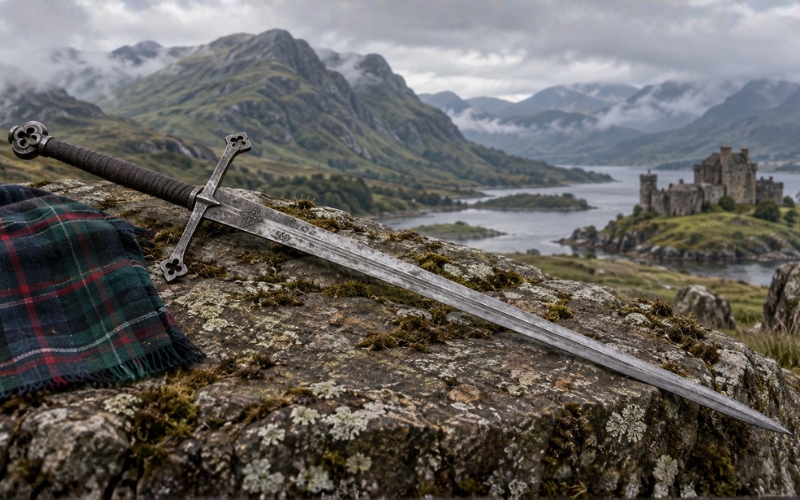
Historically, the Claymore played a crucial role in Scottish warfare, symbolizing its wielders’ martial prowess and national identity. It was utilized in significant battles and wars, leaving a lasting impact on Scottish military history. Today, examples of the Claymore can be found in museums like the British Museum, showcasing its craftsmanship and historical significance. Overall, the Sword remains a potent symbol of Scotland’s martial heritage, revered for its design, functionality, and enduring cultural legacy.
History of Claymore Sword
The Claymore, meaning “great sword” in Scottish Gaelic, played a pivotal role from the 15th to 17th centuries in Scotland’s clan wars and conflicts with English borderers. Originating in the early Scottish Independence wars of 1296, it became iconic through figures like William Wallace, earning the nickname “William Wallace Sword” for its symbolic defiance against English rule.
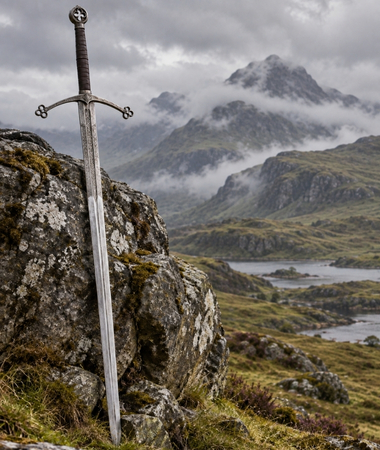
Despite variations in size and design, the Claymore remained a potent symbol of Scottish identity and martial prowess. Its last recorded military use was in the Battle of Killiecrankie in 1689, where Highland clans supported King James VII. Although no longer used in combat, the Claymore retains significance in Scottish art and culture, embodying themes of courage and heritage. Its historical impact includes influencing key battles such as Dunkeld in 1689, shaping Scottish and Jacobite history. Today, the Claymore endures as a cultural symbol, representing Scotland’s enduring spirit and struggle for independence throughout history.
How Heavy is a Claymore Sword?
The Claymore sword, measuring 140 cm (55 in) in length with a 107 cm (42 in) blade and weighing 5.5 lb (2.5 kg), represents a lighter and more maneuverable evolution from earlier broadswords. Characterized by a two-handed grip and distinctive downward-curving quillons ending in quatrefoils, it offers enhanced control and tactical versatility in combat. Its iron blade, adorned with stamped ornaments, extends beyond a wooden handle, facilitating effective thrusting and parrying maneuvers. The inclusion of a “Ricasso” on some models allows for half-swording techniques, adding further tactical flexibility. These features, coupled with its historical prevalence in Scottish military history, highlight the Claymore’s significance as a symbol of martial innovation and prowess.
Conclusion
The Claymore sword stands as more than a mere artifact of Scotland’s martial past; it embodies the essence of Scottish heritage and resilience. Though no longer wielded in battle, its legacy endures in museums across Britain, where it serves as a tangible link to the nation’s storied history. From its iconic appearance in films like “Braveheart” to its depiction in historical accounts, the Claymore remains a symbol of Scottish pride and defiance. Today, enthusiasts can acquire replica versions, allowing them to connect with this powerful symbol of courage and independence without the threat of its once-deadly edge. As a cultural icon, the Claymore sword continues to inspire fascination and admiration, preserving its place not only in military history but also in the hearts of those who cherish Scotland’s enduring spirit.
Frequently Asked Questions
What does the word claymore mean?
It comes from the Scottish Gaelic claidheamh mòr, meaning great sword. Strictly it refers to the two-handed Highland sword of the late medieval and early modern period. Confusingly, the name was later also applied to the basket-hilted broadsword, a one-handed weapon, which is why the term is used for two quite different swords.
How heavy is a claymore?
Far lighter than people expect. A genuine two-handed Highland claymore weighs roughly two to three kilograms, around five to six pounds. The image of an unliftable slab of iron comes from film and fiction. A sword that heavy would be useless in a fight; real ones were balanced to be swung repeatedly.
How can you recognise a Highland claymore?
By the cross-guard. The quillons slope forward towards the blade rather than sitting straight, and they end in pierced quatrefoil terminals shaped like four-leaf clovers. That combination is distinctively Scottish and is the clearest way to tell a Highland two-hander from a continental one.
When was the claymore used?
Mainly from the fifteenth to the seventeenth century, in the era of clan warfare and the Highland charge. It was gradually displaced by the basket-hilted broadsword, which could be used with a targe in the other hand. By the time of the Jacobite risings the two-handed claymore was already largely historical.
Did William Wallace use a claymore?
Not the sword usually shown. Wallace died in 1305, before the two-handed Highland claymore developed, so the weapon in Braveheart is an anachronism like the kilt. The sword displayed at the Wallace Monument is of a later type and its association with him is traditional rather than documented.